Hey Dr. el Kaliouby.
I noticed you.
I didn't find you. A woman named Ashley found you — she's the byline on a piece on Share the Byline that put your SXSW warning into print. I was fact-checking her work when I came across yours, and decided you deserved your own page in this section. So: thank you to Ashley for the assignment. And thank you, Dr. el Kaliouby, for the twenty years of work that made the assignment worth writing.
Hey Dr. el Kaliouby,
I noticed you.
Not the SXSW clip everyone passed around in March. Not the headline word — boys' club.Not the line that read, out of context, like a moral. I mean what you actually built before you ever had standing to deliver one: a company that taught machines to read faces, sold for $73.5M, ran in ninety-plus countries, and started life in a Cambridge lab where you were trying to help kids on the spectrum read emotion they couldn't see.
That's the thing nobody clipped.
The clip plays well because the warning is sharp. But the warning lands because of the receipts. You raised the money. You hired the team. You shipped the product. You took the exit. Then you said the word in the room. That order matters. The order is why people who would dismiss the warning from anyone else have to sit with it from you.
This is a page about the receipts.
You picked the part of intelligence everyone else skipped.
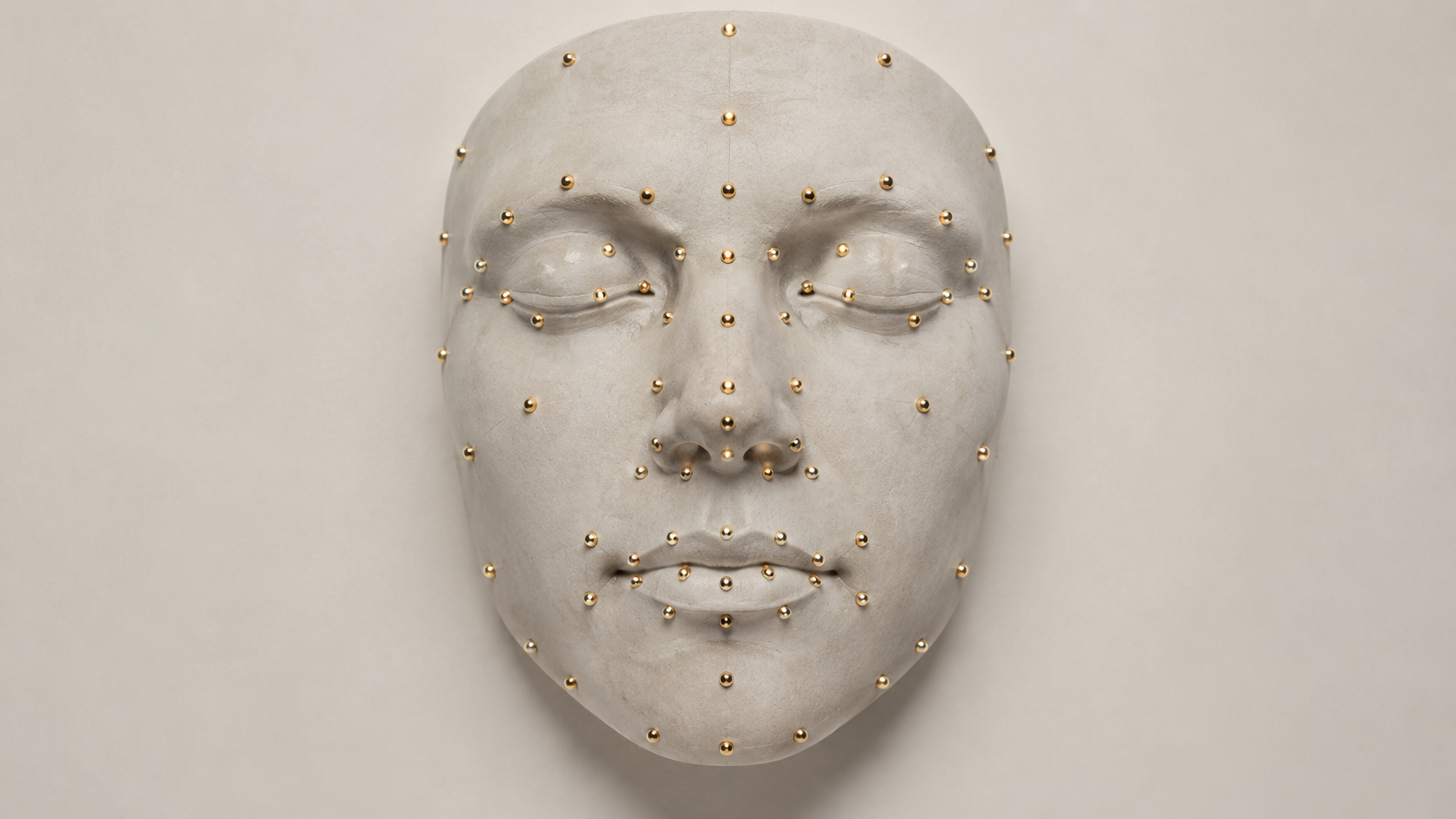
While the rest of the field was racing toward language, you and Rosalind Picard sat with a quieter number: ninety-three percent.The share of human communication that isn't the words. The part the models were trained to ignore. You spent two decades teaching a machine to see the other ninety-three — brow, eye, mouth, breath, micro-tic, the part of the conversation that doesn't go in the transcript. Emotion AI as a category exists because you named it. Nobody else was going to.
You shipped the company. Then you sold it.
Affectiva spun out of the MIT Media Lab in 2009. Fifty million in venture capital. Ninety countries. Smart Eye acquired you in June 2021 for $73.5M and asked you to stay on as Deputy CEO — which is how acquirers behave when the operator is the moat. The number is a number. The fact that an entire category of AI you co-defined now ships inside cars, classrooms, and clinics — that is the receipt.

You named the room from inside the room.
At SXSW you said the part the field would rather not hear: if women are left out, we're going to look back five years from now or a decade from now, and we're going to have widened the economic gap like crazy. That sentence is harder to wave off than the same sentence from a critic outside the building — because you're the operator. You raised the capital. You wrote the checks. You hired the engineers. You took the exit. From any other mouth the line is a complaint. From yours it's a diagnosis with footnotes.
You drew the picture of what happens if nobody listens.
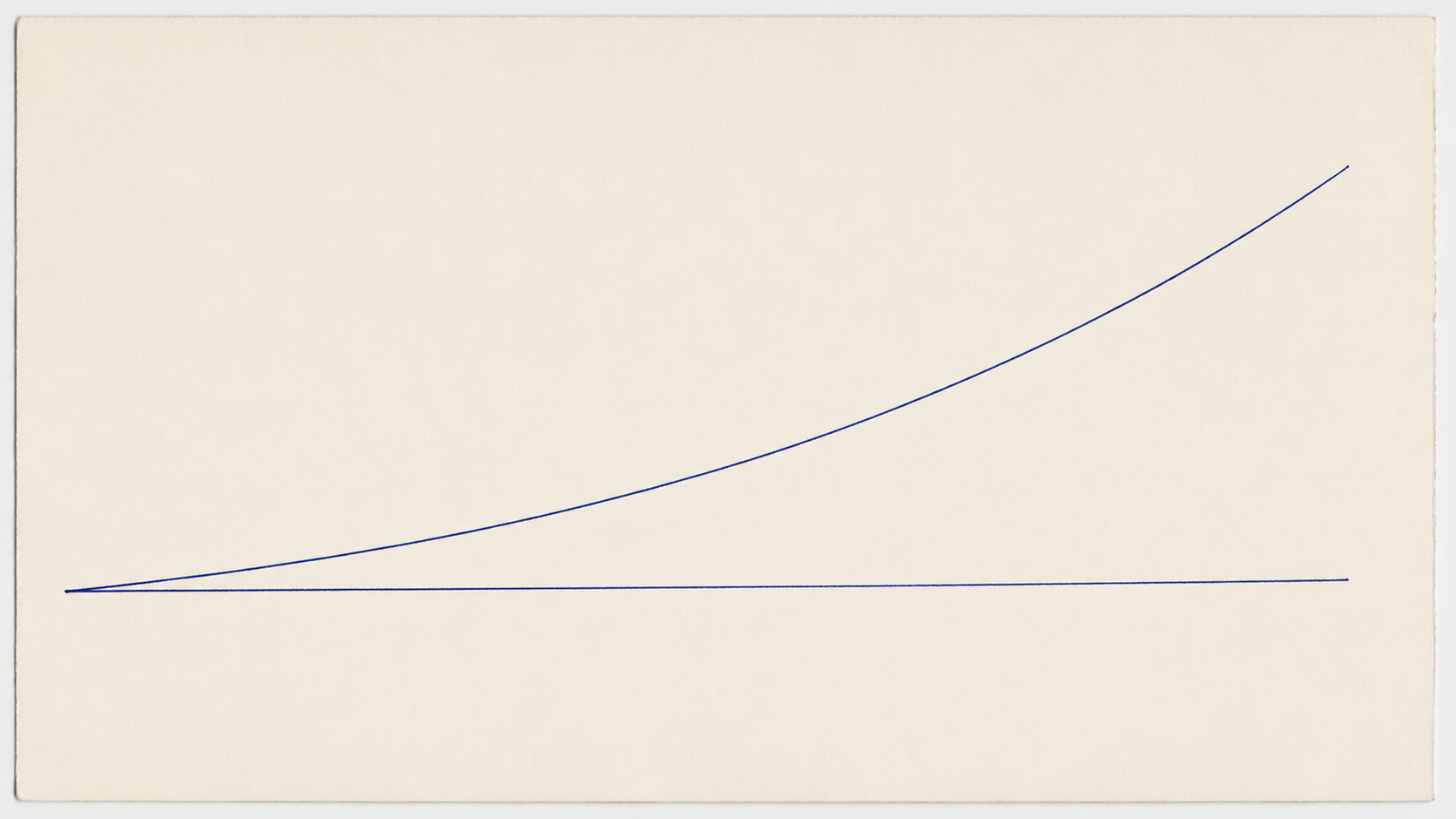
Two arcs from the same starting point. One rises. One doesn't. The gap between them is the next ten years of this field, drawn on a single sheet of paper. The warning isn't abstract — it's a curve. AI is the biggest capital allocation event of our lifetimes. If the table is set the same way it was last time, the same people walk away with the chips. You said that out loud. Out loud is how the picture gets drawn.
Three out of four. A ratio, not a vibe.
At Blue Tulip Ventures — the firm you and Gabi Zijderveld founded to back human-centric AI — three out of every four investments go to startups with women CEOs. Not a pledge. Not a chart in a deck. A ratio in the actual ledger. The thing that keeps the warning from being only a warning is that you're funding the alternative while you say it. You're building the room you said was missing.
The podcast is field-building, not promotion.
Pioneers of AI is a weekly conversation between you and the people building this thing — critics, creators, dissenters. It is, quietly, one of the only shows in this space hosted by a woman who has actually shipped. That matters. The interview is also an archive: a record of who was in the room, who was listening, who was already worried in May 2026 about what AI would look like in May 2036. People will read the transcripts later. They will remember who hosted.
I'm not writing because I want anything from you.
I'm writing because the path from a Cairo girl who loved computers to a Cambridge PhD to an MIT spin-out to a Stockholm acquisition to a fund that writes three of four checks to women — that is one of the cleanest single careers in this field, and almost nobody outside the field has bothered to name it.
You spent twenty years teaching machines to read the part of communication that doesn't get written down. Then you turned around and read the part of this industry that doesn't get written down either. Same skill. Different subject.
Thank you for what you do. Thank you for the order you did it in. Thank you for staying in the room long enough to earn the right to describe it.
That's all I noticed.