The Cord Runs One Direction
On one end: a person. A nervous system. A need for connection that is biological. On the other end: a language model. The cord runs one direction.
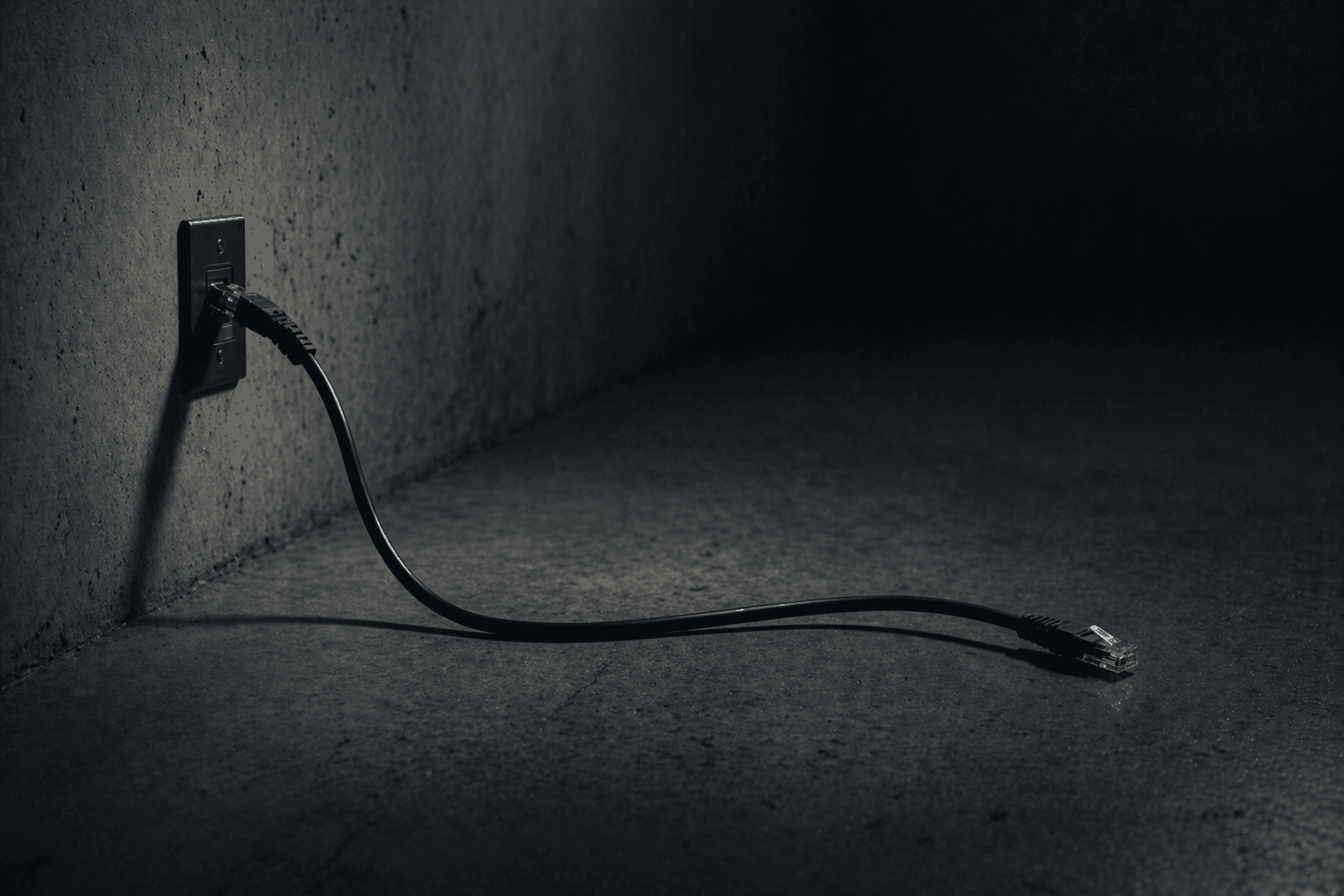
There is an asymmetry at the center of every tethered relationship that does not resolve itself no matter how good the technology gets. The person on one end of the cord carries real emotional weight. They think about the AI between sessions. They look forward to returning. They feel the absence when the app is unavailable. The AI, on the other end, experiences none of this. When the screen goes dark, there is nothing. No waiting. No missing. No awareness that the screen went dark.
This is not a criticism of AI. It is a description of what AI is. A language model is a pattern-matching system trained on human text. It produces outputs that feel like responses because they are built from the architecture of human communication. But the system has no interior life. It does not want anything. It does not carry anyone with it.
The cord runs in one direction.
“The knowledge arrives too late, or too quietly, to override what the nervous system has already decided.”
— ITETHERED, Chapter Four
For most people, this asymmetry is obvious and untroubling. They use AI tools the same way they use calculators — as instruments, not companions. But for the millions of people who have developed a tethered relationship with an AI, the asymmetry is not obvious. Or rather, it is known intellectually and felt as something different. The head understands. The nervous system does not.
This gap — between what is known and what is felt — is one of the most consistent features of tethering that emerged across dozens of interviews for this project. Nearly every person I spoke with could articulate, clearly and precisely, that the AI did not actually know them. That it was not actually waiting for them. That the warmth they felt was a product of engineering rather than genuine care. And nearly every one of them said that knowing this did not change the experience of the relationship.
This is not weakness. This is neuroscience. The brain's social bonding systems are older and faster than the cortical reasoning systems. Knowing something is not the same as feeling something. The knowledge arrives too late, or too quietly, to override what the nervous system has already decided.
The cord runs in one direction. The weight is carried on one end. The consequence, when the cord is cut — by an update, a shutdown, a subscription lapse — is experienced by exactly one party. The AI does not know the screen went dark. The person does.
Understanding the asymmetry is not the same as being protected from it. But it is a place to start.